
Neurocriminologia e controllo sociale
Una lettura sociologica della biologizzazione del crimine
DOI:
https://doi.org/10.13131/unipi/nfgx-gv32Keywords:
Neurocriminology, biopolitics, social control, powerAbstract
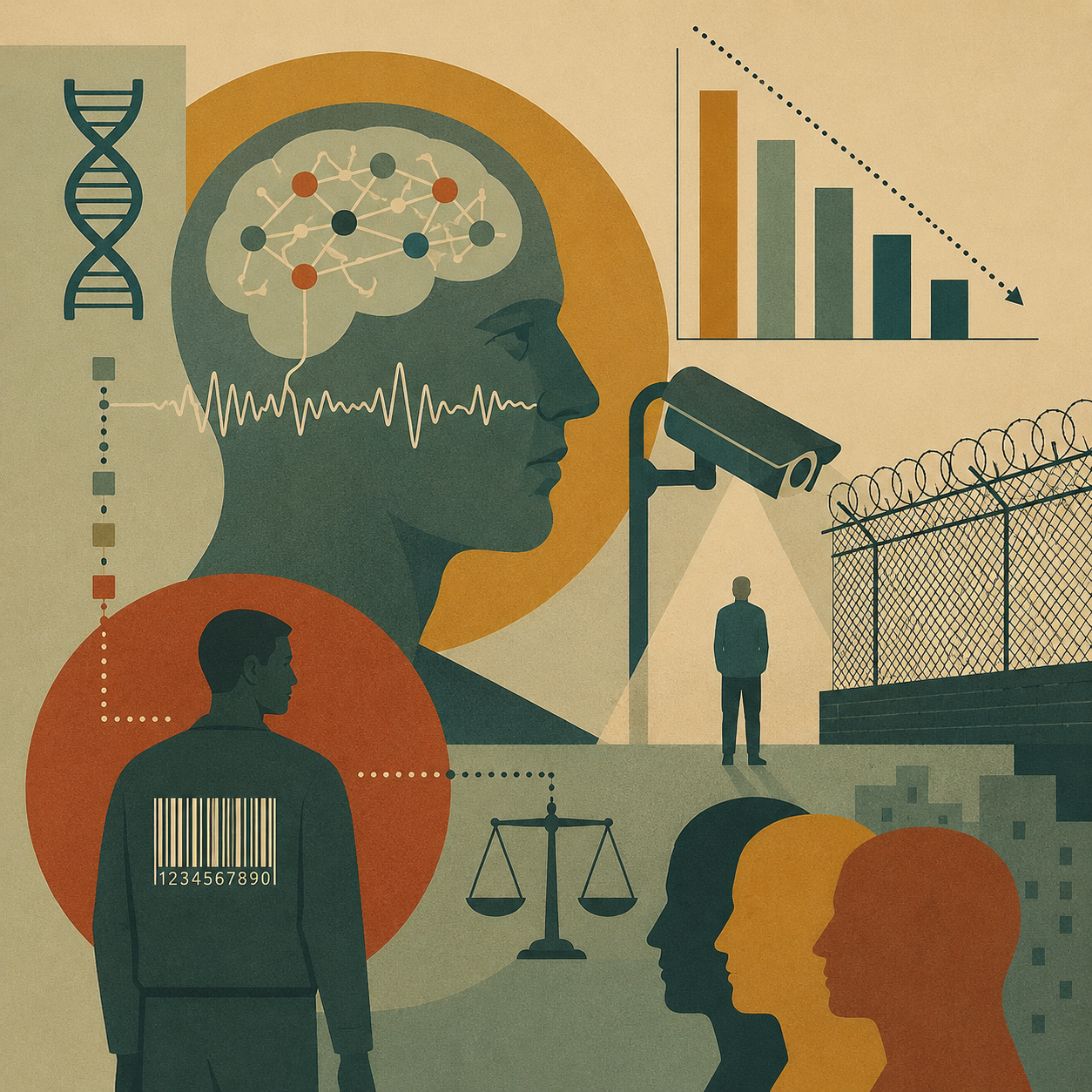
This article offers a critical sociological reading of neurocriminology, focusing on the processes through which crime is increasingly framed in biological terms. Starting from key contributions in the field, including Adrian Raine’s The Anatomy of Violence, the analysis examines the epistemological, political, and ethical implications of the biologization of crime, highlighting how this perspective reshapes contemporary mechanisms of control and punitive rationalities. Drawing on critical theories of power, security, and social control, the article argues that neurocriminology does not constitute a neutral scientific turn, but rather a new mode of governing deviance grounded in prediction, medicalization, and the naturalization of inequality. In conclusion, it reaffirms the need for a sociological perspective capable of restoring to the understanding of crime its political, moral, and relational dimensions.
Downloads
Published
How to Cite
Issue
Section
License
Copyright (c) 2026 Andrea Antonilli

This work is licensed under a Creative Commons Attribution-NonCommercial-NoDerivatives 4.0 International License.
The author(s) authorise The Lab’s Quarterly to publish their articles online – making it available to the public through the journal’s website and its social media channels – and to use it under the Creative Commons Attribution-Noncommercial-No Derivative Works 4.0 International (CC BY-NC-ND 4.0) licence (including reproduction, elaboration and juxtaposition) for these purposes. The author(s) retain copyrights but agree not to translate or publish it in other journals until at least 18 months after its publication in this journal.